


Please check the following before contacting us.

Basic Information on Cassettes
Q:What is a cassette tape?
Q:Will shorter audio source than the 10-minute tapes leave silence at the end?
Q:What is the minimum order quantity?
Q:What colors are available for the cassette shell?
Q:Are all cassette shells the same shape?
Q:Is it possible for you to manufacture Blank Tapes?
Q:What are Tab-In and Tab-Out?
Q:I feel the tape pitch is slow.
Q:Is tape slack causing playback issues?
Master Audio Source
Q:Please advise how to submit the audio file.
Q:I would like to know about the types of magnetic tape.
Q:I would like to know about the audio format.
Q:Could you shorten the initial silent section?
Q:Is it possible to visit for on-site coordination?
Production of Design Data
Q:Please advise how to submit the design file.
Q:Can I see a proof before printing?
Q:What are the points to note when creating design data?
Q:How small can the lines and font size be made?
Q:Is it possible to submit only JPG data?
Q:What is the difference between CMYK and RGB?
Q:Can you produce mock samples?
Labels
Q:What is a paper label?
Q:What is a direct on-body printing?
Q:Please advise the printable area for direct on-body printing.
Jackets
Q:What is a J-CARD?
Q:What is an O-CARD?
Q:Can a paper sleeve be inserted onto the case?
Q:Can you insert lyric cards or download cards?
Cases and Packaging
Q:What options are available for the plastic case?
Q:What is an overlap?
Order Form and Track List
Q:What is an order form track list?
Q:What is a catalog number?
Payment and Delivery
Q:When is the payment due?
Q:Please advise on the lead-time.
Q:Is it possible to shorten the lead-time by an extra fee?
Q:Is delivery to the event venue or split delivery possible?
Q:Is international shipping available?
Portable Cassette Players
Q:I feel the playback speed is slow (fast).
Q:Noise is sometimes heard during playback.
Environmental Considerations
Q:Please tell me about eco-friendly measures.

Basic Information on Cassettes
A:It refers to the compact cassette, which is usable when housed in its small case (63.1mm × 100.4mm × 12mm).
Following its development by Philips, it became widely adopted globally after the patent was released free of charge in the 1960s. A mere 3.81mm wide tape contains four sound-recording tracks, comprising four channels: Side A stereo (L and R) and Side B stereo (L and R). The tape speed is rated at 4.76 cm/s; however, due to the analogue nature of the media, variations may occur depending on motor speed, temperature, humidity, and other factors. Generally, the permissible range for playback speed on playback equipment is considered to be ±1.5%.
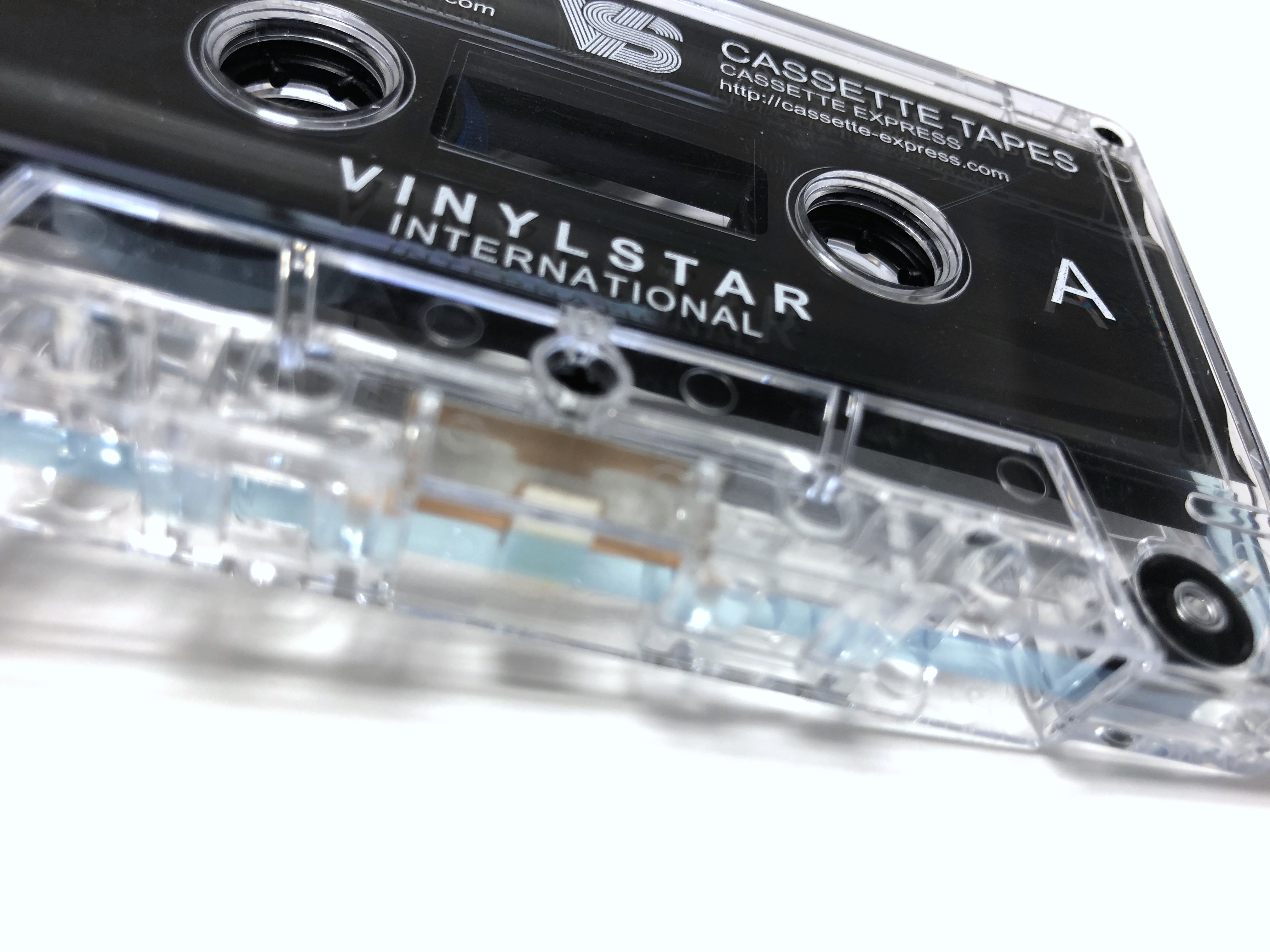
A:We often receive questions such as:‘For a 30-minute tape (15 minutes per side), if the audio source is only 14 minutes per side, will the final minute be silent?’
Our website lists reference prices for round time of 10, 20, 30 minutes and so on, in 10-minute increments, as a guide for pricing. Instead, we insert tape into your chosen shell according to the duration of the audio source you submit. Therefore, we produce “brand new” music tapes with no surplus remaining, so there is no need to adjust the audio source to fit precisely to lengths such as 10-minute increments.
Normally, the maximum recording time is 60 minutes across both sides (30 minutes per side). However, by using thinner magnetic tape, we can duplicate up to 90 minutes (45 minutes per side).
▶︎Details about tape fractions

A:We accept orders starting from 50 items per title (additional items added per 1 thereafter). For repeat orders, the minimum quantity is also 50 items. Furthermore, cassette players can be manufactured in batches of 50 units or more.
A:We offer approximately 100 colors including various opaque, clear and tinted transparent, glitter, fluorescent, and recycled eco-friendly specifications.
You can produce designs tailored to the artist and artwork image. Simply changing the colour of the cassette can dramatically alter the image of the work!
▶︎Shell Color List
The cassette itself may develop contact marks or scuffs due to movement and vibration during the manufacturing process, on the production line, during label application, or during transport. With opaque or pale transparent colors (clear liner), this is scarcely noticeable. However, with deep transparent, gloss finishes, black liners, or metallic liners, a slight difference in visibility may occur, though the degree varies. We kindly ask for your understanding regarding the specific characteristics inherent in the mass production of cassette tapes.
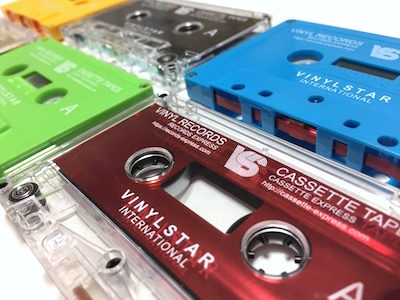
A:The overall dimensions of the shell are standardized.
On the other hand, the assembly method, edging, and window sections differ depending on the specifications.
・Assembly method : Screw-fastening or Pressure-fit
・Edge trim : Border area on sides or flat
・A/B surface : With window frame or flat
Opaque shells have a window frame (to see the tape) protected by a clear plate or film (Liner sheet).
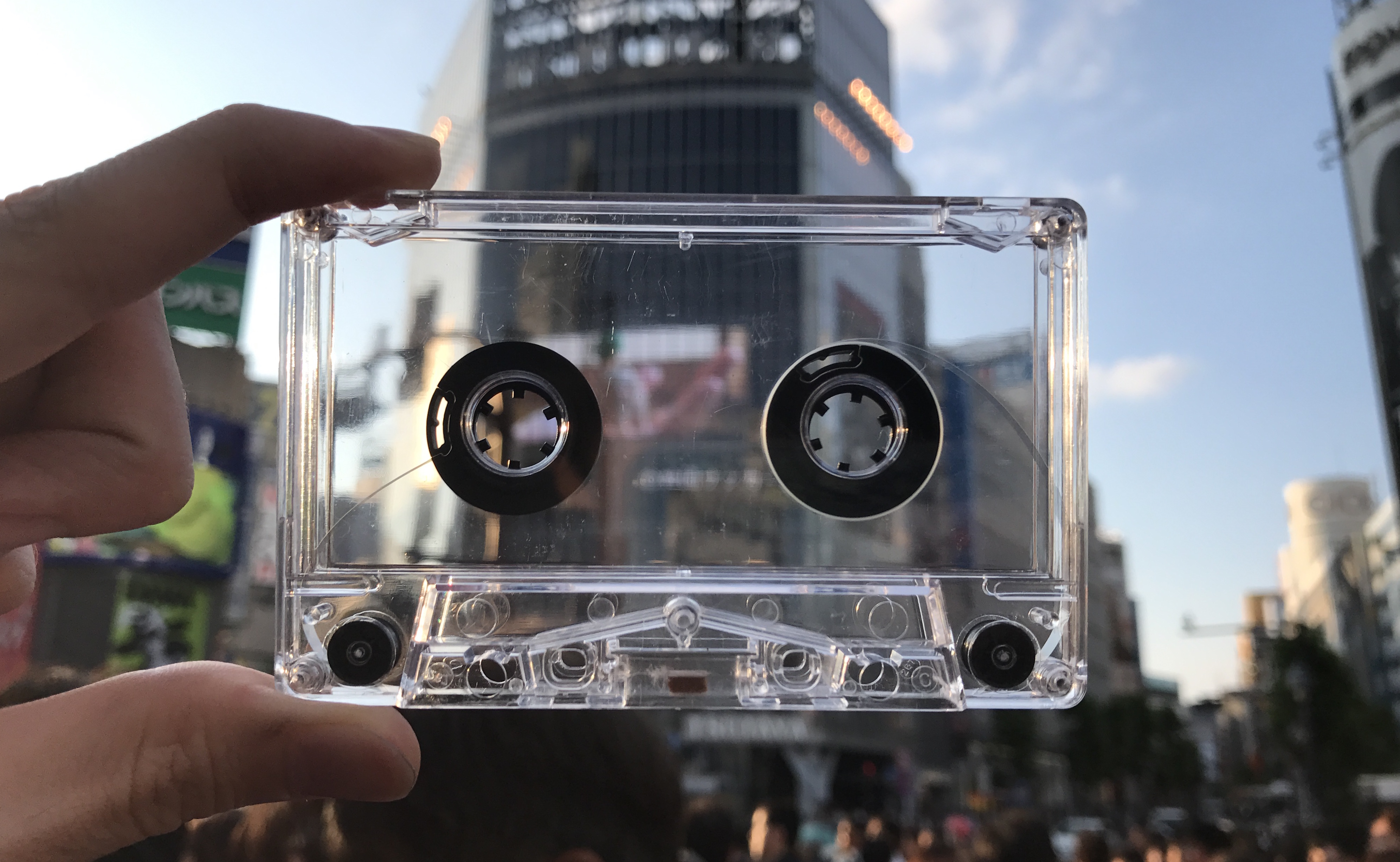
A:Yes, but we do not undertake the manufacture or sale of blank tapes alone, we can supply them in a blank cassette without recorded audio when ordered with jacket and label printing. In such cases, even if the tape is blank, the fee for inserting magnetic tape will be the same as for dubbing recording. Magnetic tape of your desired length can be inserted and the minimum order quantity is set at 50 items.
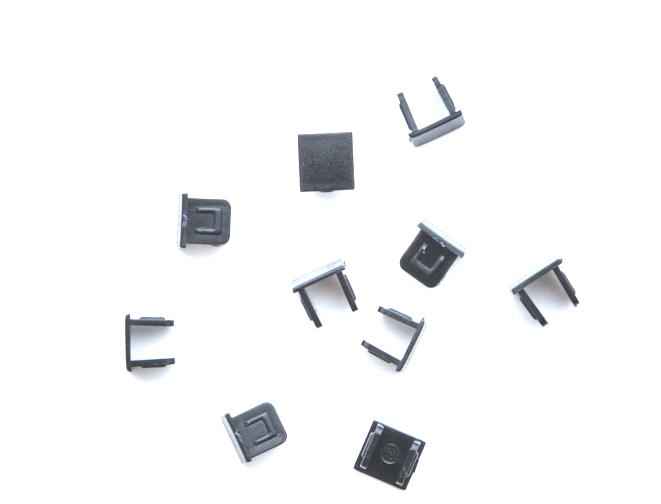
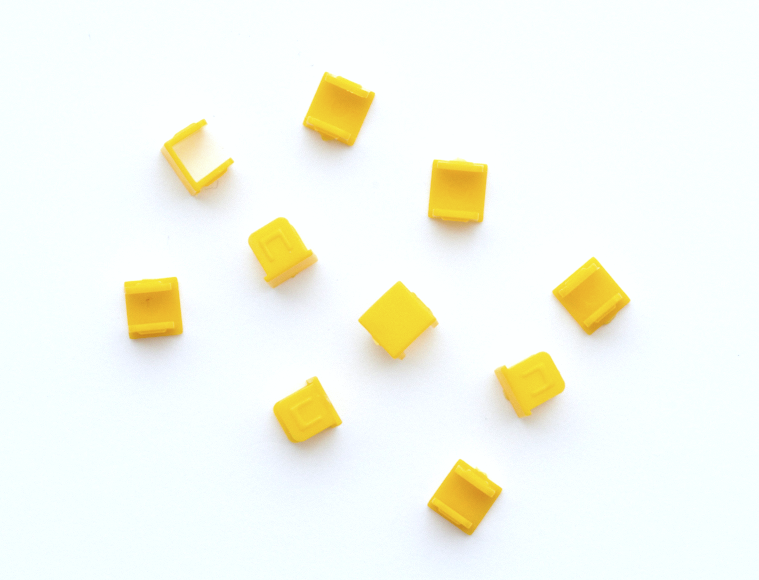
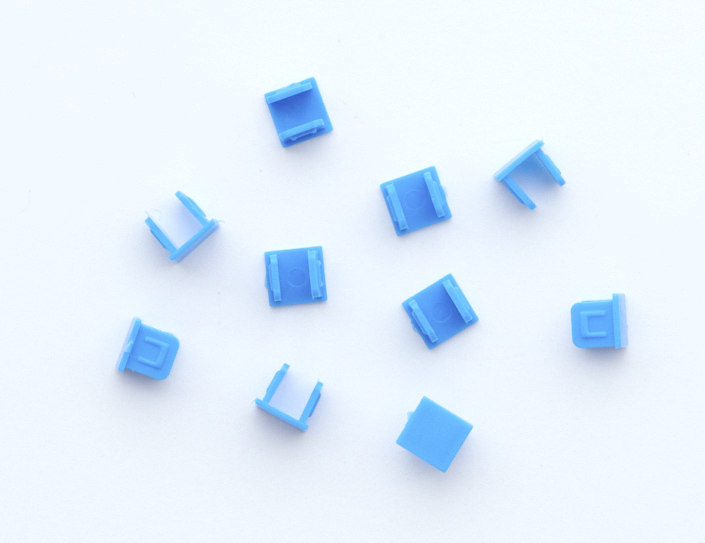
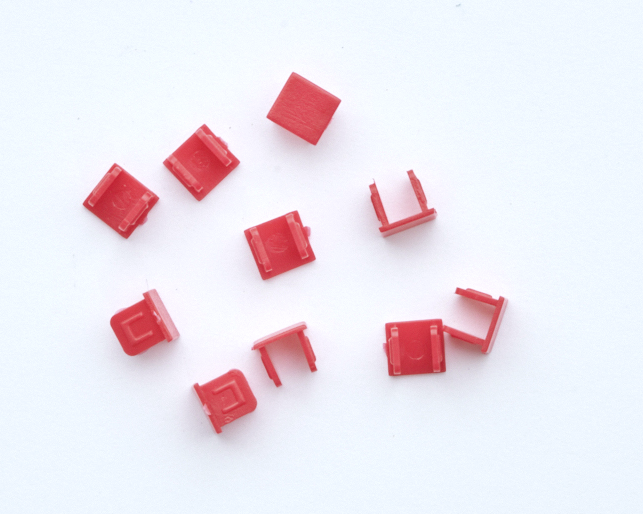
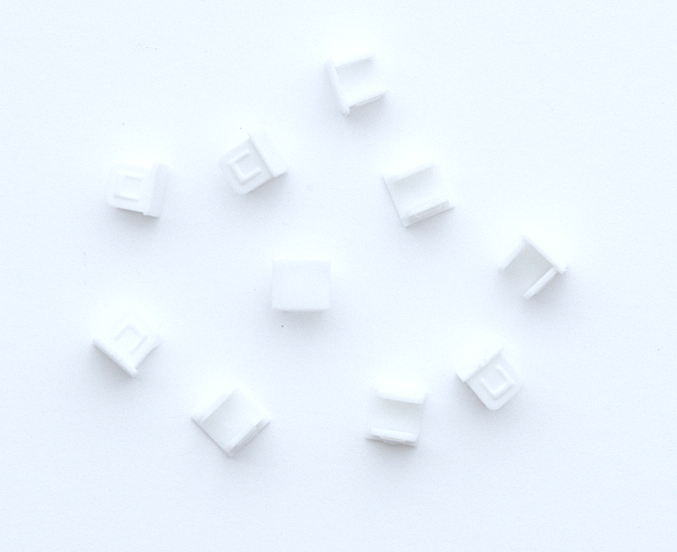
Please note that the product will be in a recordable either by selecting the shell with the Tab-In specification featuring a claw to prevent accidental erasure, or by fitting the dedicated Tab Cap (optional) with the ‘Tab-Out’ specification without the claw.

A:For music tape production, we use cassette shells that are tabbed out (with holes on both sides of the upper edge).
The claw-like protrusions on the upper side prevent accidental erasure; if there is nothing in this hole, the cassette deck will no longer be able to overwrite recordings or erase them. This claw is referred to as a “Tab”. Commercially available Blank Tapes feature a tab-in specification with a tab, whilst Music Tapes feature a tab-out specification without a tab.
Incidentally, a cassette in a tab-out state with a broken tab can be made recordable by covering the hole in the tab section with scotch tape or similar.
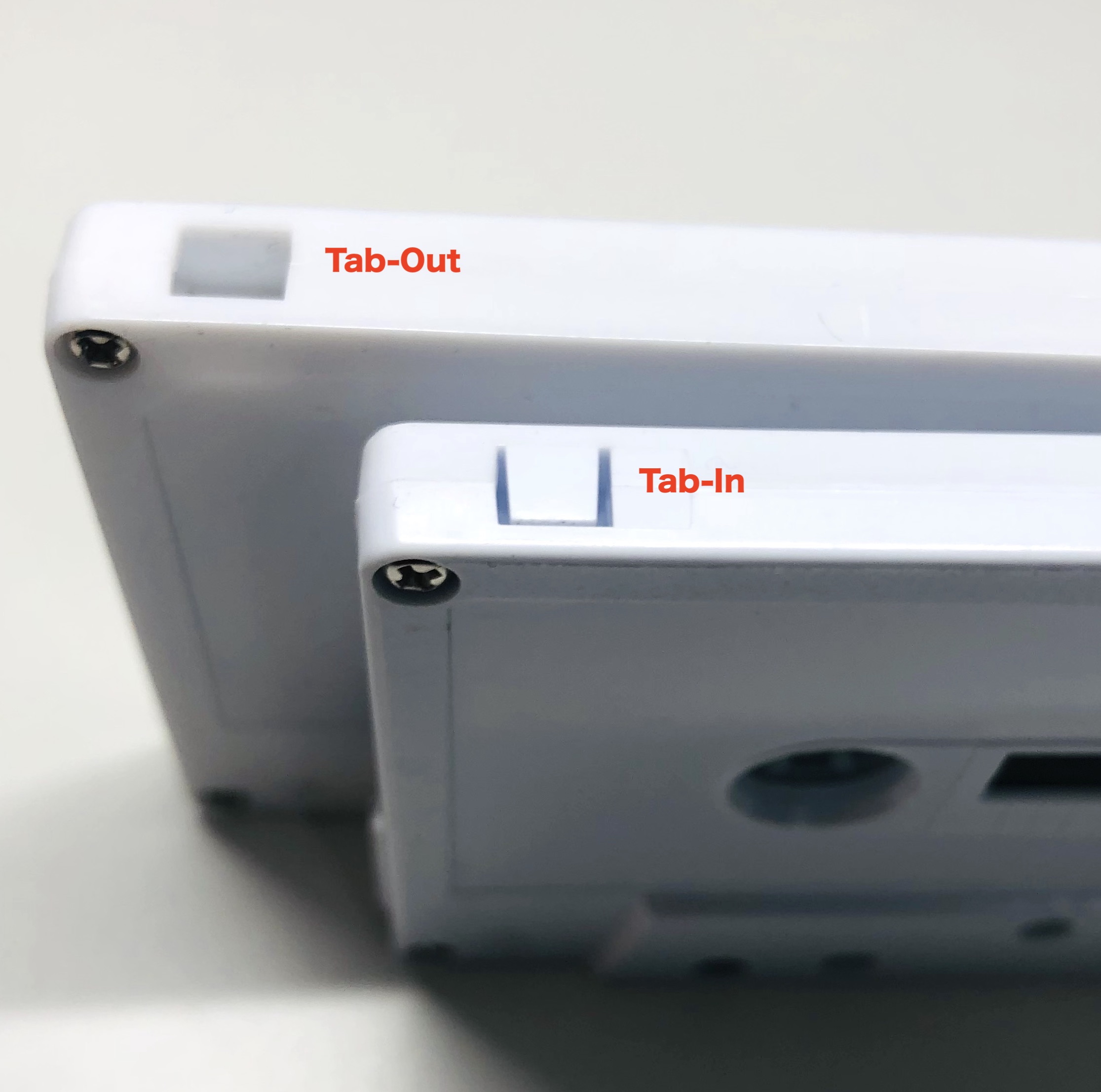
We offer optional caps in several colors that fit perfectly over the shell of the Tab-Out.

A:The playback speed of our manufactured cassette tapes is maintained with an error margin of approximately ±0.15%, representing a higher degree of precision than the standard tolerance of ±0.5%.
If you notice the pitch is slow or the sound is unstable during playback, this is usually due to dirt around the heads in the cassette deck or cassette player, or deterioration of the motor or belt, causing variations in playback speed. Cleaning around the head and adjusting the rotation speed (for players with an adjustment function) will generally resolve the issue. However, if the motor or belt has deteriorated, replacement parts may be required.
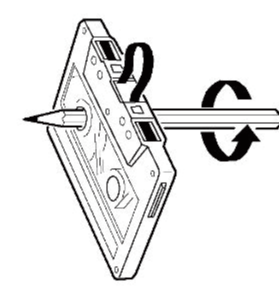
A:Sometime yes. The product may experience tape slack due to vibrations during shipping, which in rare cases can cause the tape to become entangled in the machine or break. We recommend removing any slack from the tape using a pencil or similar object before setting it in place prior to playback.
Master Audio Source
A:After uploading your audio files to online storage (such as Dropbox, Google Drive, or firestrage), please paste the uploaded URL into the “Remarks” section of the Order Form or Track List and submit it. When placing an order via the PDF download form, you may also submit the URL by attaching it to an email.
▶︎Step-by-step instructions are provided in the user guide
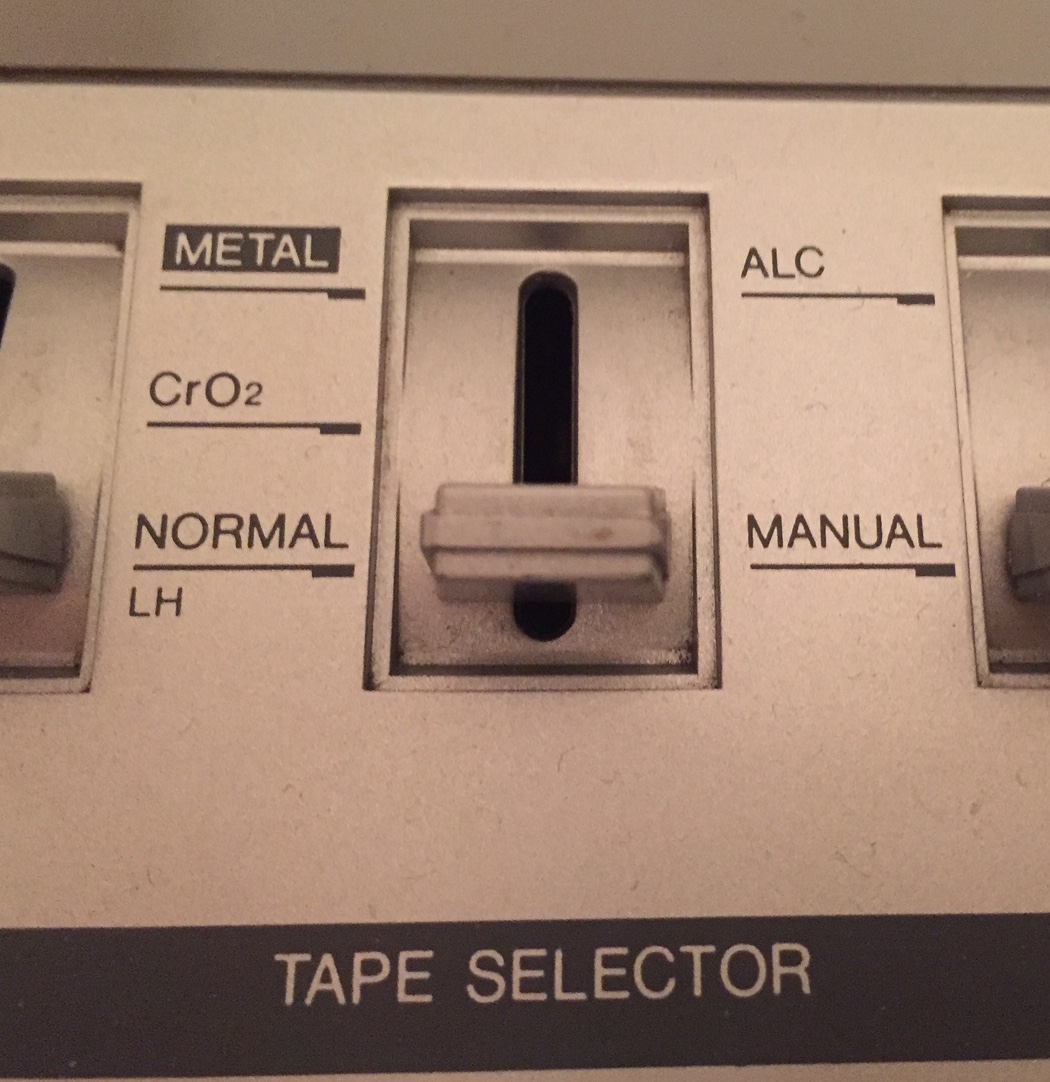
A:We use music grade normal tapes as our standard specification.
An optional charge (approximately 20-30% surcharge) applies, but we can also accommodate custom orders for production using the “Studio Pro” magnetic tape, which offers superior high-frequency characteristics and low hiss noise.
Cassette tapes were available in four types—Type I, Type II, Type III, and Type IV—based on their electrical characteristics. However, only Type I magnetic tape is currently produced commercially.
Type I is referred to as “normal tape” and is a basic tape utilizing iron oxide for its magnetic properties.
A:Only wav or aiff files at 16-bit / 44.1kHz are supported.
Should the file be in a high-rate format such as 24-bit/48kHz, we will either request resubmission or convert it to 16-bit/44.1kHz upon request (subject to an additional charge). We support not only stereo audio sources but also mono.
Regardless of the number of tracks, we prefer submissions as a single continuous file for all tracks on Side A, and similarly for Side B. However, please ensure the track list clearly specifies the title and duration of each track, along with the total duration for each side.
A:Cassette tapes incorporate transparent leader tape at both ends to prevent exposure of the magnetic tape section.
The silent period during playback, including the leader tape, is set to approximately 12 seconds. Modifications such as shortening this silent period are not permitted under the specifications.
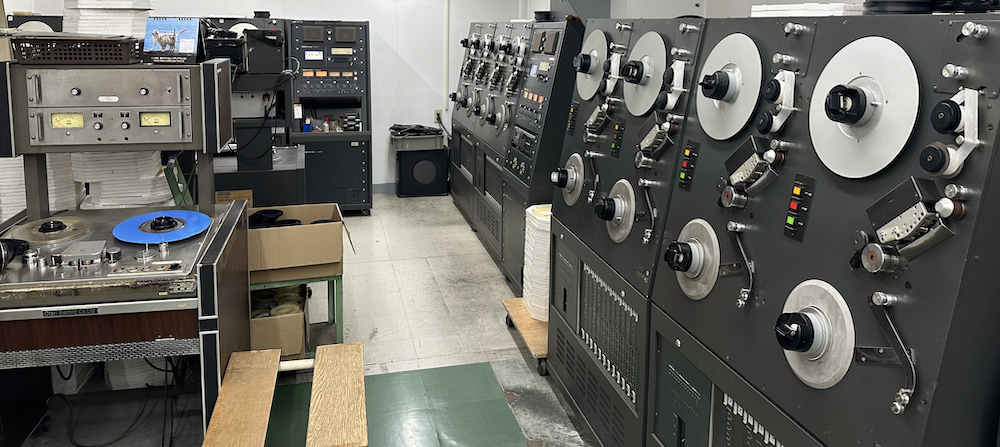
A:Yes. Like vinyl record-cutting, we welcome customers to visit our factory directly for level adjustments conducted with an engineer present.
Subject to test tape production costs, we will implement measures to counteract distortion specific to cassettes and adjust levels (distortion, dB, sound pressure) prior to duplication.
This facility is a manufacturing plant with operational production lines, not a studio. We do not undertake mixing or mastering work here. We do not accept audio sources other than those specifically commissioned, nor do we offer tours to the general public. We shall only process audio files submitted to us in connection with cassette tape production orders placed with us.
▶︎For more details on factory visit
Production of Design Data
A:After uploading your design files to online storage (such as Dropbox, Google Drive, or firestrage), you may submit them by pasting the uploaded URL into the “Remarks” field on the Order Form or Track List.
When placing an order via the PDF order form, you may also submit the URL by attaching it to an email.
▶︎Step-by-step instructions are provided in the user guide
A:Yes. Proofs for printed materials such as jackets and labels will be provided as digital proofs in formats such as PDF or JPEG (free of charge). Please review the proof images via the linked file. Mass production will commence upon your approval. Should you wish to revise the design during image confirmation, resubmission is possible.
If you would like to see an actual printed color proof, we can arrange this for an additional fee. Paper stock and finish options as well as actual paper proofs are also available.
A:Please use the templates available on our website.
Please submit your design created as vector data (path data), with a 3mm bleed added (direct printing onto the main body is not required), and with layers separated after outlining. Additionally, as cassettes have a Side A and Side B, please ensure the label side features a design that clearly distinguishes between Side A and Side B, and include the product code in the file name when submitting your materials.
After reviewing the submitted data, we may request resubmission should any deficiencies be found (please note that verification may take several days following submission).
Production will commence once all order documents, design data and master audio files are complete. Should resubmissions be required, this may affect the delivery schedule.
A:We recommend a line width of 5pt or greater and text of 2mm or greater. Please note that lines or text thinner than 5pt may not be reproducible. For details regarding the designable area, please refer to the template.
A:No, as vector data is required for the printing process, we regret that we cannot print using JPG files alone.
Should you find it difficult to create designs using Illustrator or Photoshop, we also offer a design creation service.
The design fee varies depending on the design, but for simple text-based designs, it starts from JPY5,000 excluding tax. If you could provide us with concept images or materials for the design, we will be able to confirm the design fee.
A:Please create jacket and label submission data in CMYK.
CMYK: Used in color printing. It is a four-color mixing method that combines the three primary colors—Cyan, Magenta, and Yellow—with black (Key plate) in printing. As colors mix, they become darker and approach black.
RGB: Used in TV and computer displays. It consists of the three primary colors of light: Red, Green, and Blue. The more colors are mixed, the brighter the color becomes, approaching white.

A:Yes. For those wishing to see a finished product image, we can produce a sample cassette featuring your submitted design.
This will typically be a mock-up sample without magnetic tape inserted. However, we can also provide a sample containing magnetic tape for a more realistic impression, subject to an additional charge.
▶︎Details on sample production
Labels
A:The set features paper labels affixed to both sides of the shell, allowing full-colour (CMYK) printing of text and logos on a white background.
It is well-suited for very fine text and intricate logo designs, and permits different designs on each side or application to one side only.
▶︎For more details on paper labels
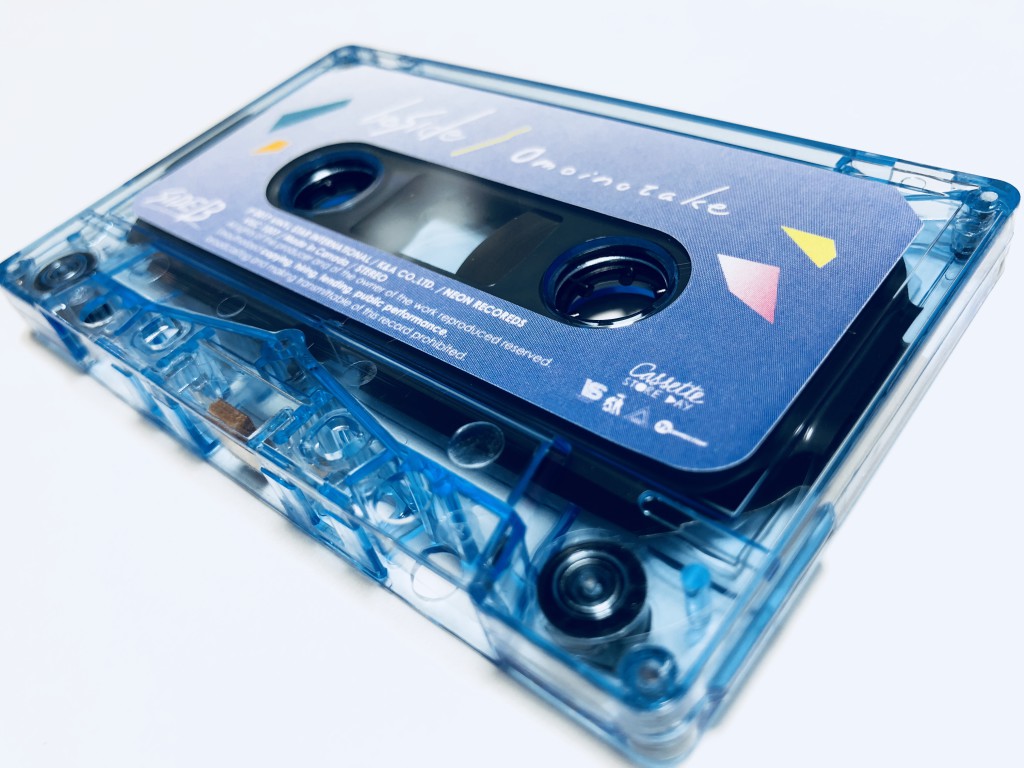
A:This method prints ink directly onto the cassette shell, enabling different designs on both sides or printing on one side only.
Using a UV inkjet printer, it supports either white or black single-color printing, or CMYK plus white four-color process printing (RGB or Spot colors are not possible).
For single-color designs in shades other than white or black, printing is applied over a white base layer.
Printing without a base layer is possible, but as this results in a semi-transparent, muted colour tone, we recommend applying a white base layer.
Line widths of 5pt or greater and text of 2mm or greater are recommended, achieving a finish comparable to printing on paper. Conversely, lines or text smaller than 5pt may not be rendered.
The cassette shell features structural plastic seams and ridges. Whilst these are not noticeable with paper labels, they may become more apparent with direct printing on the body, depending on the design.
▶︎Details about direct on-body printing
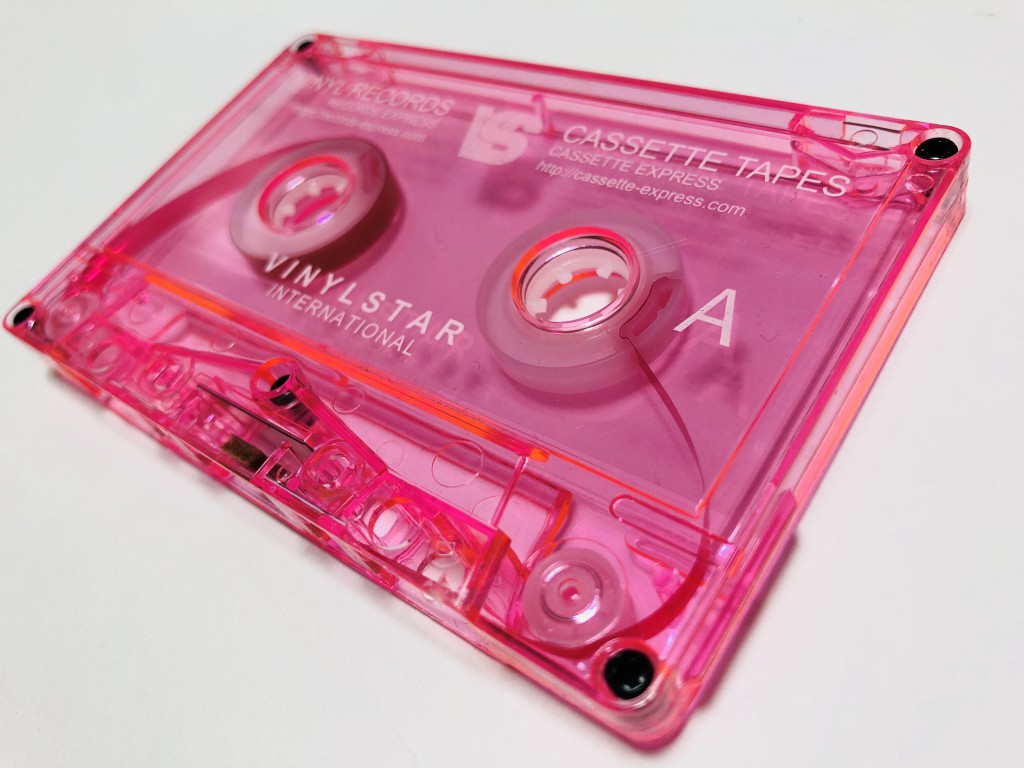
A:Designs can be applied to the flat areas, excluding the left and right rotation holes and the central window.

Full-surface printing on both sides of the cassette shell is also available as an option (the sides are excluded). The shell with a window frame in the center has a transparent rigid plastic or thin film fitted to its rear surface. Consequently, the print on this section will appear slightly recessed compared to other areas.

Jackets
A:The specification involves folding the card into three panels and setting it inside the plastic case.
When viewed from the side, it resembles the letter ‘J’, hence the name ‘J-CARD’. They were once also called “index cards” because people used to write in the song titles themselves. Typically featuring a three-panel design comprising the largest surface, the back, and the inner sleeve surface, printing is possible not only on the front but also on the reverse.▶︎For more details on J-CARD
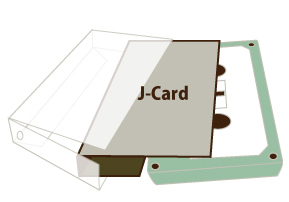
By adding 1 to 5 additional panels to the largest surface and folding them in, it can be used as a substitute for a lyric sheet. We recommend using overlap wrapping, but for those wishing to insert items themselves, we will instead include an OPP bag separately with your order.

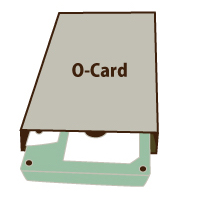
A:This paper jacket specification involves inserting the cassette directly into a cylindrical paper sleeve without placing it inside a plastic case.
Viewed from the side, its shape resembles the letter ‘O’, hence it is called an ‘O-CARD’. O-CARD is lightweight and allows for design on all four sides. Upon request, full-color printing is available on the inside of the sleeve at an additional cost. Wrapping is not suitable for overlapping, so we recommend inserting items into OPP bags.
▶︎For more details on O-CARD
A:Yes. It is also compatible with the outer sleeve of the plastic case known as the ‘Outer O-CARD’.
Whereas the standard O-CARD features a sleeve into which the cassette tape is inserted directly, the Outer O-CARD is designed to accommodate the cassette within its case before being inserted into a slightly larger O-CARD sleeve.
Other specifications are identical to standard O-CARDs, allowing full-colour design on all four sides, with the option for an overlap on the outer case.
▶︎For more details on Outer O-CARD
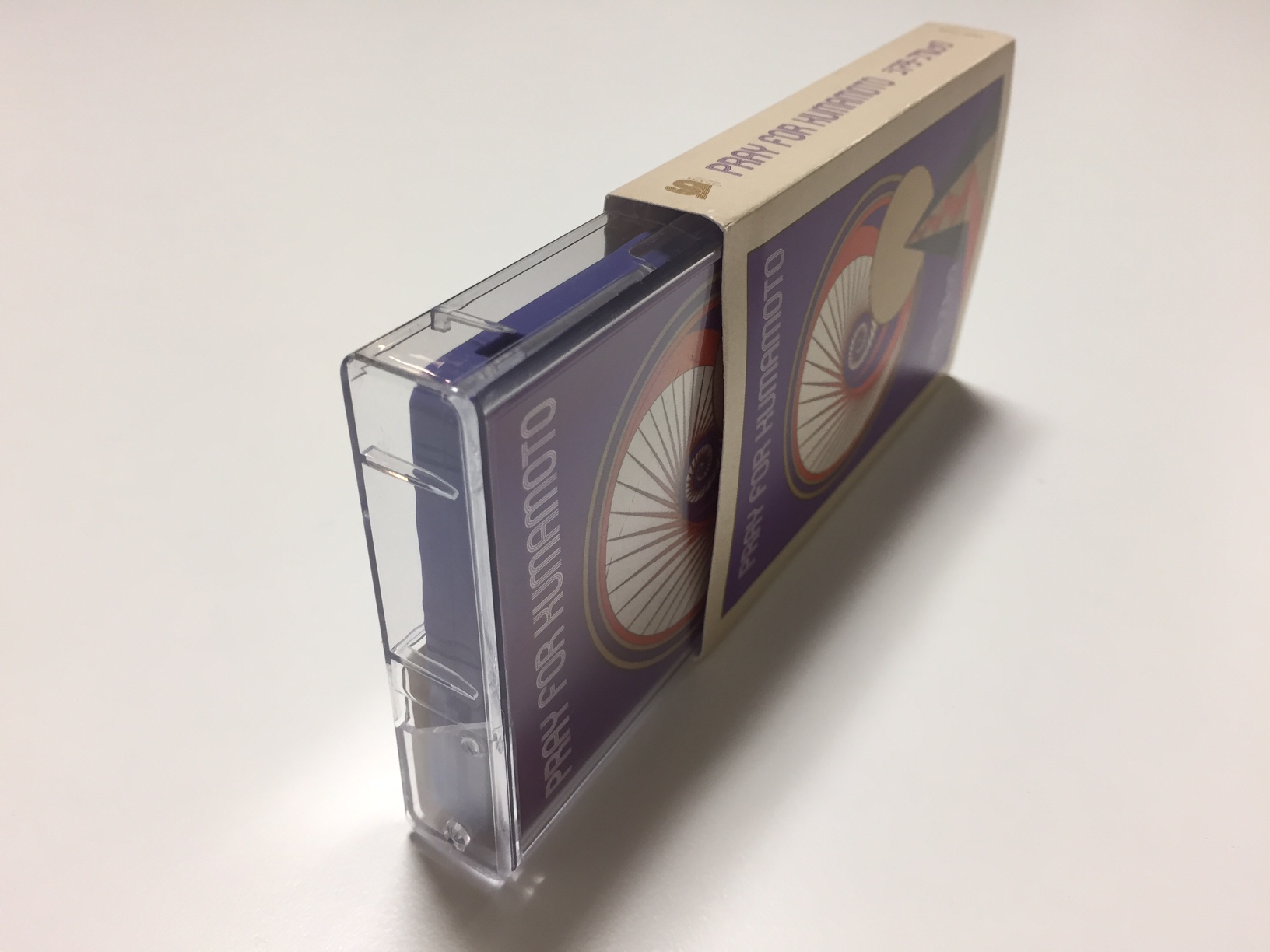
A:Yes. Instead of inserting a separate lyric sheet, it is common practice to fold in additional panels (1 to 5 sheets) onto the widest surface of the J-CARD, thereby utilizing it as a lyric sheet. Additionally, it is possible to insert a lyric sheet separately from the jacket.

We also support the insertion of download cards. When produced by our partner SONOCA, you can freely design the card surface, match it to the J-CARD design, and also apply the same design to the thumbnails on the dedicated download site.
Download cards, lyric sheets, and similar items provided by you can also be included in the case. Additionally, we offer the option to affix stickers on the wrapping.
Cases and Packaging
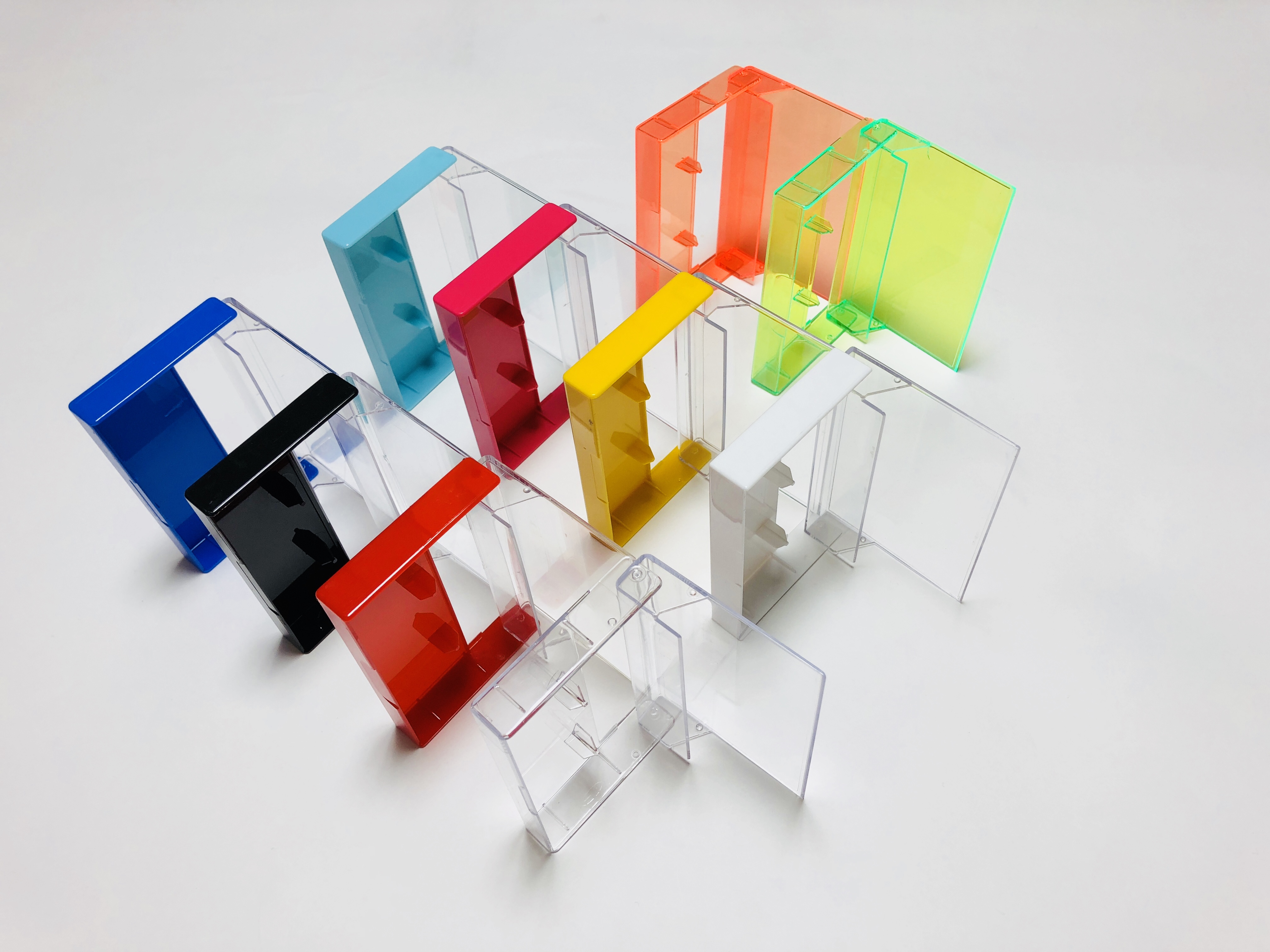
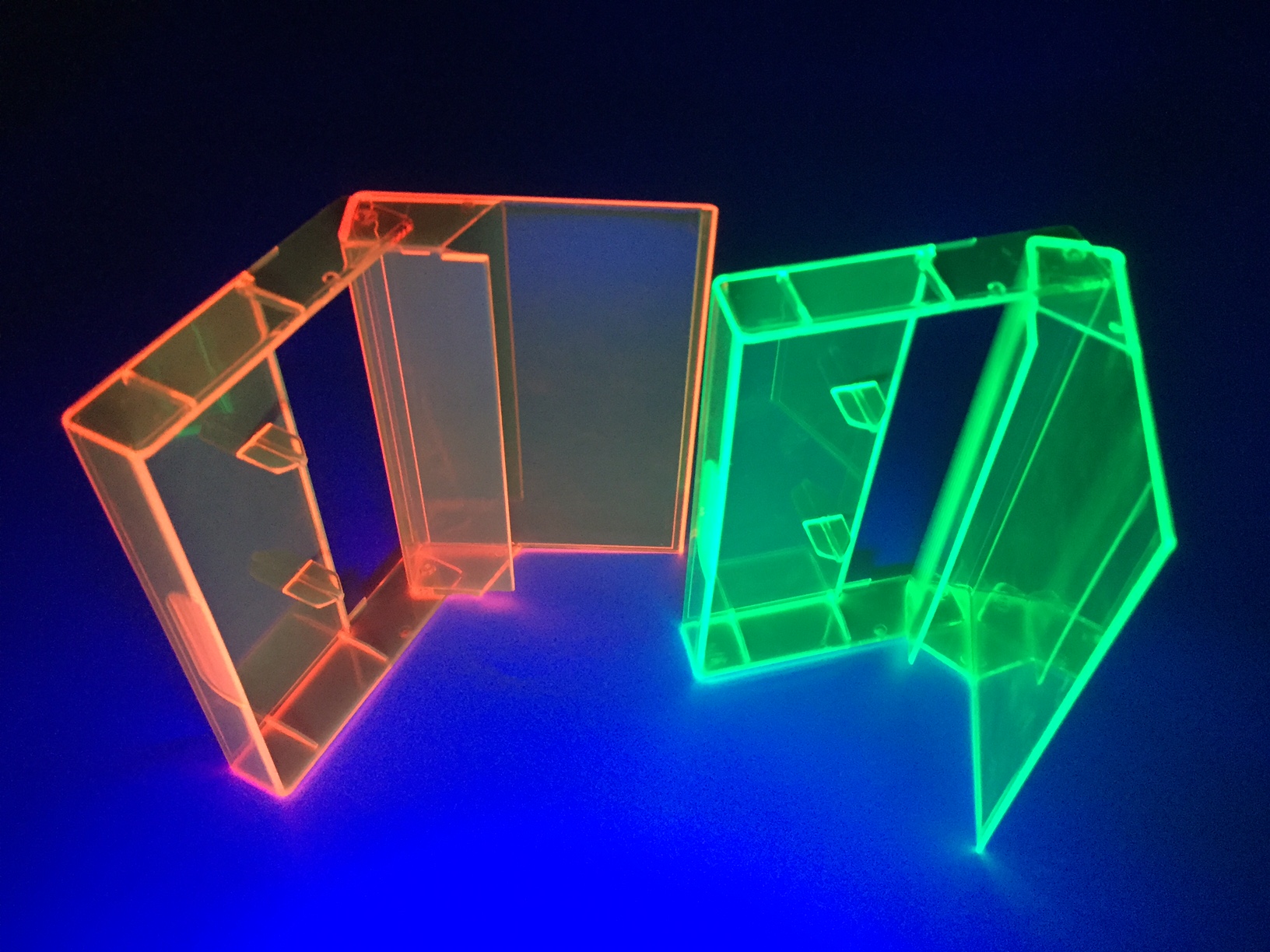
A:The standard specification features a fully transparent case. Optional variations include a clear surface with opaque color back, fully translucent or fluorescent colors as well as two-unit and three-unit cases. We also offer flexible solutions for pouch specifications and specialized designs.
▶︎Case color list
A:This is a film with tear tape. The case features a specification where the exterior is fully covered in film, similar to a cigarette packet’s outer packaging. Pulling the tear tape allows the film to be easily opened.

Order Form and Track List
A:Please complete the details of your order, including audio source information, using the form located under “Order” at the top of the website.
We request that you complete the necessary details online and then submit the form.
▶︎Order form / Track list
A:Product number. We manage all orders by product number throughout our manufacturing process. Therefore, we would appreciate it if you could include the product number in the design on the jacket and label, and also specify it in the file name submitted (e.g., XXYZ-12345).
Payment and Delivery
A:Payment is generally required at the time of placing your order.
Please arrange bank transfer or credit card payment when submitting your data.
Following your order, we shall email you an invoice containing details such as our bank account information as an attachment. For credit card payments, we will send you a separate payment email.
▶︎About payment
A:Production commences upon receipt of the order form, track list, complete data submission, and payment confirmation. EXPRESS colours (limited to 5 colours) require 7–10 working days, while standard colours have a typical lead time of 10–15 working days (based on business hours, excluding weekends and public holidays).
Should you require a resubmission, additional processing time may be necessary. Should you wish to receive a test tape, please allow approximately one week extra. Additionally, the J-CARD additional panel specification and special box may require additional days.
▶︎About delivery
A:Yes. An express delivery option is available to expedite completion earlier. Availability and additional charges vary depending on the desired delivery date and specifications.
Additionally, we offer a self-discount option where customers complete the final assembly themselves, which can reduce production time by several days to a week if selected. Furthermore, while shell colors are limited, we also provide specifications that can be produced within a short timeframe (our EXPRESS color shells).
A:Yes. We also offer direct delivery to event venues and warehouse. And partial deliveries can be arranged at an additional shipping fee.
A:Yes. For international shipments, shipping costs will be calculated separately and included in the quotation and invoice.
Import duties and consumption tax for the destination country must be paid by the recipient upon collection.
Portable Cassette Players
A:Generally, cassette playback devices (decks, players, etc.) exhibit individual variations in playback speed, and strictly speaking, all have different speeds.Incidentally, even during the cassette boom of the 80s and 90s, the tolerance for new commercially available products was set at 1.5%. We adjust the playback speed at the factory, but individual variations may occur depending on initial operation and frequency of use.
This product features a function enabling fine adjustment of the motor rotation speed. A small hole is located at the bottom right of the rear panel. Inserting a flathead precision screwdriver (1.4mm) into this hole and turning it left or right allows for fine adjustment of the tape speed.


A:When using a cassette player near electrical appliances or other devices that emit electromagnetic waves, electrical “noise” may occur. Additionally, noise may occur due to tape vibration.During the cassette boom era, high-specification portable cassette players and premium models of radio cassette players and cassette decks featured special stabiliser functions. These secured the cassette itself in an optimal position, thereby reducing vibration and enabling sound reproduction with minimal noise. This product does not feature a stabiliser function, so noise may occur depending on the angle of the player.
Environmental Considerations
A:The cassette shell, case, magnetic tape, and inks used in the body printing comply with the Restriction of the use of certain Hazardous Substances (RoHS) Directive, with the content of the specified chemical substances being below the threshold levels.